Airbnb 1099 Reporting: What STR Hosts Need to Know About 1099-K in 2026
No credit card required
Tax season hits and you open your mailbox (or your Airbnb inbox) to find a 1099-K. Or maybe you didn't get one and you're wondering whether you still owe taxes on your rental income. Either way, 1099 reporting trips up more short-term rental hosts than almost any other tax topic. Here's exactly what you need to know.
What Is a 1099-K and When Does Airbnb Send One?
A 1099-K is an IRS information form that third-party payment processors — including Airbnb, VRBO, and Booking.com — use to report the gross amount of payments they processed for you during the year. The key word there is "gross." The 1099-K reports the total amount guests paid, not what actually landed in your bank account after fees, refunds, and adjustments.
For tax year 2025 (the return you're filing now in 2026), Airbnb is required to send you a 1099-K only if your gross payouts exceeded $20,000 AND you had more than 200 transactions. This threshold was a moving target for years — the American Rescue Plan Act tried to drop it to $600, the IRS delayed repeatedly and used $5,000 as a phase-in for 2024 — but the One Big Beautiful Bill Act (July 2025) retroactively restored the original $20,000 / 200-transaction rule for 2025 and every year after, a change the IRS has confirmed in its Form 1099-K FAQs.
2023 and prior: $20,000 AND 200+ transactions
2024: $5,000 (the transition-year threshold actually used)
2025 and beyond: $20,000 AND 200+ transactions — restored by the One Big Beautiful Bill Act (July 2025)
Note: Payment-card transactions have no threshold, and all income is taxable whether or not a 1099-K arrives.
What's the Airbnb 1099-K Threshold for 2026?
For tax year 2024 (return filed in 2025), Airbnb was required to issue a 1099-K if gross payouts exceeded $5,000 — the transition-year threshold. For tax year 2025 (return filed in 2026) and for tax year 2026, the One Big Beautiful Bill Act restored the $20,000 AND 200-transaction threshold, so far fewer casual hosts will receive the form going forward. Check IRS Form 1099-K guidance for the latest.
Regardless of threshold, Airbnb reports all host transaction data to the IRS. Even if you don't receive a 1099-K, your income is still taxable and must be reported.
What Does Airbnb's 1099-K Report — Gross or Net?
Gross. The number on your 1099-K is the total dollar amount guests paid through Airbnb's platform — before Airbnb's host service fee, before refunds and cancellations, and (in many jurisdictions) before occupancy taxes Airbnb remitted on your behalf. That means the 1099-K total will almost always be higher than what hit your bank account. Your job at tax time is to reconcile the gap so you're paying tax on actual income, not the inflated gross figure.
Here's what's typically rolled into the gross 1099-K total but should be netted out before you report income:
| Item in 1099-K Gross | Treatment |
|---|---|
| Airbnb host service fee (~3%) | Deductible expense on Schedule E line 19 (or Schedule C line 17) |
| Cleaning fees you charge guests | Income — but the cleaner you pay is a deductible expense |
| Refunds & cancellations | Subtract from income (keep the resolution records) |
| Occupancy / lodging taxes Airbnb remits | Pass-through — neither income nor expense (varies by jurisdiction) |
The full reconciliation walkthrough is in the How to Reconcile section below. For the cleaning-fee piece specifically, see Are Airbnb Cleaning Fees Tax-Deductible? — the gross-vs-net mechanics there mirror the 1099-K issue.
Do I Need to Report Airbnb Income If I Didn't Get a 1099?
Yes. Full stop. You owe federal income tax on all rental income regardless of whether you receive a 1099-K. The 1099 is just an information form — it tells the IRS what Airbnb already knows. Not getting one doesn't mean the income is invisible or tax-free.
If you earned $4,500 from Airbnb and didn't come near the $20,000 / 200-transaction threshold, you still report every dollar. The IRS requires you to report all income from all sources. Airbnb also has your SSN or EIN on file and could share transaction data with the IRS even without issuing a 1099-K.
The practical takeaway: track your income from day one, not from the day a 1099 shows up. You can download your full payout history from Airbnb's earnings dashboard at any time — do that before you sit down to file.
How to Report STR Income: Schedule C vs. Schedule E
No credit card required
Where you report your Airbnb income depends on how the IRS classifies your rental activity. This is one of the most important decisions in STR taxes, and it affects far more than just which form you fill out. We wrote a full breakdown of the STR business vs passive rental decision, but here's the short version:
Schedule C (Business Income)
You file Schedule C if your average guest stay is 7 days or fewer and you provide substantial services (cleaning, supplies, guest communication) while materially participating in the business. Most active Airbnb hosts fall here. The upside: you can deduct business expenses and potentially use losses to offset your W-2 income. The downside: you'll owe self-employment tax (15.3%) on your net profit.
Schedule E (Rental Income)
You file Schedule E if your rental is treated as passive rental activity — typically longer stays, fewer services, or you don't meet the material participation requirements. Rental losses on Schedule E are generally limited to $25,000/year (and phase out at higher income levels), and you won't owe self-employment tax.
Either way, you report your gross rental income on the appropriate form and then subtract your eligible deductions to arrive at your taxable net income. If you need a comprehensive list of what you can write off, our 2026 STR tax deductions checklist covers every category mapped to IRS line items.
When Your 1099-K Doesn't Match Your Records
This is probably the most common source of confusion — and potential IRS trouble — for STR hosts. Your 1099-K will almost certainly show a different number than what you actually received in payouts. That's because:
- Platform fees. Airbnb's host service fee (typically 3%) is deducted before your payout, but the 1099-K reports the gross amount before fees.
- Cleaning fees. If you charge a cleaning fee, it's included in the 1099-K gross total.
- Refunds and cancellations. The 1099-K may include bookings that were later refunded or cancelled. You'll need to account for these adjustments.
- Occupancy taxes. In some jurisdictions, Airbnb collects and remits occupancy taxes on your behalf, but the 1099-K may still include those amounts in the gross total.
- Adjustments and resolutions. Guest damage payouts, host guarantee payments, and other non-rental income might appear in your 1099-K total.
The biggest mistake you can make is reporting only the net payout amount (what hit your bank account) when the IRS has a 1099-K showing a higher gross number. The IRS matching system will flag the discrepancy and you could receive a CP2000 notice. Instead, report the gross income from your 1099-K, then deduct fees and adjustments as business expenses. This way your numbers match what the IRS expects to see.
How to Reconcile Airbnb Payouts With Your 1099-K
Here's a step-by-step process that works:
1. Download your Airbnb earnings summary. Go to your Airbnb account, navigate to the earnings section, and download your annual tax summary and detailed transaction history for the year.
2. Compare the gross earnings total to your 1099-K. The gross earnings figure on your Airbnb tax summary should match (or be very close to) Box 1a on your 1099-K. If it doesn't, look for timing differences — Airbnb may allocate income based on checkout date while payouts happen on a different schedule.
3. Identify the adjustments. Subtract host service fees, refunds, cancellations, occupancy taxes remitted by Airbnb, and any resolution payouts. Document each category.
4. Reconcile with your bank deposits. Your total Airbnb deposits to your bank account should equal the 1099-K gross amount minus all the adjustments identified in step 3. If the numbers don't tie out, look for split payouts, timing differences around year-end, or co-host payout splits.
5. Keep the reconciliation with your tax records. If the IRS ever questions the discrepancy between your 1099-K and your reported income, you'll want a clean paper trail showing exactly how you got from one number to the other.
If you host on multiple platforms (Airbnb, VRBO, direct bookings), you may receive multiple 1099-Ks. You'll need to reconcile each one separately, but report all the income together on a single Schedule C or Schedule E. DeductFlow can pull in income from multiple platforms and reconcile automatically.
State-Level 1099 Reporting Differences
Federal thresholds are only part of the picture. Many states have their own 1099-K reporting requirements, and some are more aggressive than the IRS:
- Massachusetts, Vermont, Virginia, Maryland, and Illinois have historically used lower thresholds (as low as $600) for state-level 1099-K reporting. You may receive a 1099-K for state purposes even if you don't get one federally.
- State income tax obligations exist regardless of whether you get a state 1099-K, just like at the federal level.
- Occupancy and lodging taxes vary wildly by state and municipality. Some states require hosts to register and remit these taxes separately, even when Airbnb collects them in most jurisdictions within that state. Check your specific city and county requirements.
If you operate STRs in multiple states, you may need to file nonresident state returns for each state where you earn rental income. This is where a CPA who specializes in STR taxes becomes worth every dollar of their fee.
Airbnb 1099-K Threshold Tax Year 2025
For tax year 2025, the returns most hosts are filing in early 2026, Airbnb issues a 1099-K only when your gross payouts on the platform exceed $20,000 AND you have more than 200 transactions. The One Big Beautiful Bill Act (July 2025) retroactively restored that historical rule for 2025, replacing the $5,000 transition-year threshold that applied to 2024. Payout activity below the threshold does not exempt you from reporting the income. It only means Airbnb is not required to hand the IRS an information return summarizing what you earned. Pull your 2025 earnings summary directly from the Airbnb host dashboard the moment the calendar turns to reconcile against whatever 1099-K arrives.
Do I Get a 1099 From Airbnb If I Made Less Than $600?
Not for tax year 2025 you do not. The federal 1099-K trigger sits at $20,000 of gross payouts AND more than 200 transactions, so activity under $600 is nowhere near the reporting line. That is a source of confusion because the $600 figure surfaced constantly in headlines about the original American Rescue Plan target, but that lower threshold was never implemented at the federal level, and the One Big Beautiful Bill Act (July 2025) repealed it outright by restoring the $20,000 / 200-transaction rule for 2025 and beyond. What matters for a small-scale host: you still owe income tax on every dollar you earned, even if Airbnb never generates a 1099.
Vrbo 1099 Threshold 2026
Vrbo follows the same federal 1099-K reporting framework as Airbnb, which means the $20,000 gross-payouts AND 200-transaction trigger applies for tax year 2025 returns filed in 2026 and stays in place for tax year 2026 — the One Big Beautiful Bill Act made the restored threshold permanent going forward (any future change would take a new act of Congress). Multi-platform hosts should note that Vrbo issues its own 1099-K separately from Airbnb. Cross the reporting line on either platform and you will receive a form from that platform. Aggregate every 1099-K you receive when preparing your return.
How to Report Airbnb Income Without a 1099
No 1099 in your inbox does not mean no reporting obligation. If your Airbnb activity stayed under the federal 1099-K threshold ($20,000 in gross payouts AND more than 200 transactions), you still enter every dollar of rental income on your return. Download the annual earnings summary from your Airbnb host dashboard. That document lists gross earnings, host service fees, refunds, and remitted occupancy taxes. Use the gross number as your reported income figure, then claim the fees, cleaning costs, supplies, and other operating expenses through the normal deduction categories. Keep the earnings summary as your substantiation in case the IRS ever asks how you arrived at the numbers.
1099-K Reporting Threshold 2025 vs 2026
The 2025 and 2026 threshold is the same: $20,000 of gross platform payouts AND more than 200 transactions, restored retroactively by the One Big Beautiful Bill Act in July 2025 and confirmed by the IRS in its Form 1099-K FAQs. The lone outlier is tax year 2024, when a $5,000 transition threshold actually applied — so hosts who received a first-ever 1099-K for 2024 may not receive one for 2025 even with identical payout volume. Nothing about your actual tax liability changes with the threshold. Only the paper trail visible to the IRS does: every dollar of rental income is taxable whether or not a form arrives.
Airbnb 1099-NEC vs 1099-K
Two different forms serve two different purposes. The 1099-K covers third-party payment processor activity, which is what applies when guests book through the Airbnb platform. The 1099-NEC covers nonemployee compensation, typically services performed as a contractor. A working host almost never receives a 1099-NEC from Airbnb because the platform is processing customer payments to you, not paying you as a contractor. You might, however, need to issue a 1099-NEC to a cleaner, handyperson, or property manager you pay $2,000 or more during the year (the threshold for payments made after December 31, 2025; $600 applied to 2025-and-earlier payments). Keep W-9 forms on file for any regular service provider so you have the data ready at year-end.
Common 1099 Mistakes STR Hosts Make
1. Not Reporting Income Below the 1099-K Threshold
As covered above — all income is taxable, whether Airbnb sends a 1099-K or not. Hosts who earned $3,000-$4,999 sometimes assume they're in the clear. They're not.
2. Reporting Net Payouts Instead of Gross Income
If your 1099-K says $42,000 and you only report $38,500 (what you actually received after fees), the IRS sees a $3,500 gap and may assume you underreported income. Report the gross, then deduct the fees on the appropriate expense line.
3. Ignoring Multi-Platform Reporting
Hosts who list on Airbnb, VRBO, and take direct bookings sometimes forget to aggregate all income. Every dollar from every platform and every direct booking goes on your return.
4. Double-Counting or Missing Occupancy Taxes
If Airbnb collects and remits occupancy tax on your behalf, that amount may be included in your 1099-K gross but it's not actually your income — you need to account for it correctly. On the other hand, if you're responsible for remitting occupancy taxes yourself, those payments are a deductible expense.
5. Failing to Keep a Reconciliation Trail
When the IRS sends a CP2000 notice saying your reported income doesn't match your 1099-K, hosts who kept a clean reconciliation can respond quickly. Hosts who didn't are in for weeks of stress and paperwork.
IRS CP2000 notices propose additional tax based on the discrepancy between what you reported and what the 1099-K shows. If you can't document the difference, you may owe the full amount plus interest and penalties. A $3,000 discrepancy in platform fees you forgot to deduct could cost you $1,000+ in unnecessary tax — plus the headache of responding to the IRS.
Once you know what's reported on your 1099-K, the next step is making sure you're claiming every deduction you're entitled to. See our complete guide to every deduction STR hosts can claim. And to make sure nothing slips through the cracks, download our free checklist so you're not missing any write-offs at filing time.
The right tracking software makes 1099-K reporting painless — it reconciles gross payouts against your bank deposits, categorizes fees automatically, and gives your CPA a clean package at year-end.
Prove it.
Stop Tracking in Spreadsheets. Get in the Flow.
DeductFlow automatically reconciles your Airbnb payouts with 1099-K reporting, tracks every deductible expense by IRS category, and generates a clean tax summary your CPA will love.
Start Tracking Free →Pro from $24/month or $149/year · 7-day free trial · No credit card required
The Bottom Line
The 1099-K isn't as scary as it looks — it's just a reporting form. The key principles are straightforward: report all your rental income (whether you received a 1099 or not), report the gross amount and deduct fees as expenses, keep a reconciliation that ties your 1099-K to your bank deposits, and don't forget state-level obligations.
The hosts who get in trouble aren't usually trying to cheat the system. They just didn't track well enough to report accurately. Set up your tracking now, reconcile monthly (not annually), and you'll never dread a 1099-K again.
Related Reading
- Airbnb Tax Deductions 2026: Every Deduction You Can Claim →
- How to File Airbnb Taxes in 2026: A Step-by-Step Guide →
- Are Airbnb Cleaning Fees Tax Deductible? →
- Yes, You Can Reconstruct a Mileage Log After the Fact →
- What to Bring Your CPA: STR Tax Prep Checklist →
- 7 STR Tax Mistakes That Trigger IRS Audits →
- Nashville STR Tax Guide: Local Rates & Rules →
- Austin STR Tax Guide: What Hosts Must Know →
No credit card required
Disclaimer
This article is for informational purposes and does not constitute tax, legal, or financial advice. Tax rules vary based on your specific situation, filing status, entity structure, and jurisdiction. The 1099-K threshold and reporting rules are subject to change — always verify current requirements at irs.gov and consult a qualified CPA or tax professional for guidance on your specific tax situation.
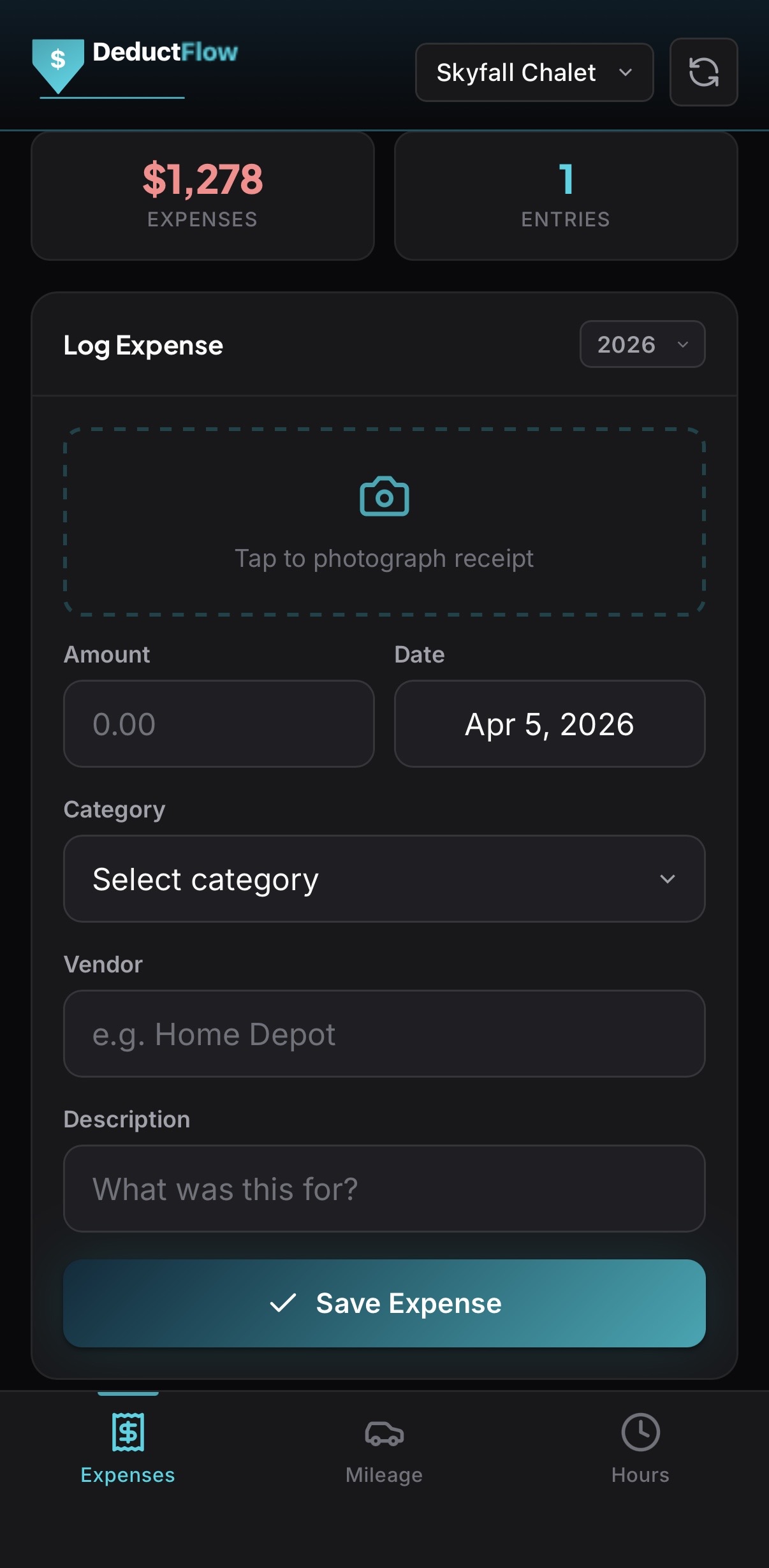
No 1099-K this year? Your own records carry the return.
With the $20K threshold back, most hosts won’t get a form — but every dollar is still reportable. DeductFlow keeps the income and expense trail that replaces the paperwork Airbnb no longer sends.
Free to start · Pro is $24/month or $149/year · Comparing tools? Start with the Airbnb tax software guide.
Frequently Asked Questions
What is a 1099-K and when does Airbnb send one?
A 1099-K is an IRS form that payment processors like Airbnb use to report gross payments processed for you. For 2025 returns filed in 2026, Airbnb is required to send a 1099-K only if your gross payouts exceeded $20,000 AND you had more than 200 transactions — the One Big Beautiful Bill Act (July 2025) retroactively restored this threshold for 2025 and later years.
Do I need to report Airbnb income if I didn't get a 1099?
Yes. You owe federal income tax on all rental income regardless of whether you receive a 1099-K. The 1099 is just an information form — not getting one doesn't mean the income is invisible or tax-free.
Why doesn't my 1099-K match my Airbnb payouts?
The 1099-K reports gross amounts before platform fees, refunds, cancellations, and occupancy taxes. Report the gross income from your 1099-K, then deduct fees and adjustments as business expenses so your numbers match what the IRS expects.
Should I report net payouts or gross income on my tax return?
Always report gross income matching your 1099-K, then deduct platform fees, cleaning fees, and other expenses separately. Reporting only net payouts creates a discrepancy that may trigger an IRS CP2000 notice.
What is the Airbnb 1099-K threshold for 2026?
For 2026, payment platforms like Airbnb must file a 1099-K only when gross payouts exceed $20,000 AND transactions exceed 200. The One Big Beautiful Bill Act (July 2025) restored this $20,000 / 200-transaction threshold for 2025 and later years, replacing the lower phase-in thresholds. Note that payment-card transactions have no threshold, and all income is taxable whether or not a 1099-K arrives.
Does Airbnb report gross or net payments on 1099-K?
Airbnb reports gross payments on 1099-K, including cleaning fees, service fees, and taxes collected. This means the amount on your 1099-K will be higher than what you actually received in payouts.
Do I owe taxes on my Airbnb 1099-K?
You owe taxes on your net rental income after deducting eligible expenses like cleaning fees, supplies, mortgage interest, depreciation, and other STR business costs. Tools like DeductFlow help you track every deduction automatically.